netsuite · netsuite-2026-2 · inventory-management
NetSuite 2026.2: AI Moves Closer to Inventory Decisions
A practitioner preview of NetSuite 2026.2’s AI skills, inventory optimization, supply planning visibility, and the audit trail for AI changes.
TL;DR
- NetSuite 2026.2 is a stream of scheduled and monthly updates, not one AI launch. For inventory teams it brings three things side by side: Ask Oracle skills, planning tools, and AI change tracking.
- Ask Oracle skills can shorten the path from "what changed?" to an investigation. They do not own replenishment decisions.
- Inventory Optimization calculates safety stock, reorder point and preferred stock level per item-location. Pegging Analysis workbooks show which demand depends on which supply.
- A new AI Used field in System Notes names the AI feature behind a record change. Useful attribution, not a governance system.
- Access depends on your upgrade, enabled features, role permissions and region. The results depend on your item, supplier and transaction data.
What's in this article
- AI skills: from a question to an investigation
- Inventory Optimization and the reorder-point calculation
- Pegging: supply and demand dependencies
- The audit trail for AI activity
- Restaurant Operations, a separate announcement
- What to watch during a rollout
NetSuite 2026.2 is not one single AI launch. It is a stream of scheduled and monthly updates that put new analysis skills, inventory planning tools, and AI change tracking beside one another. The useful question for operations teams is not whether an ERP now has AI. It is where the new capabilities fit into the decisions planners already make, and what still needs human review.
Oracle’s release documentation is updated as monthly enhancements arrive. The notes linked here were current in September 2026; feature access can depend on the account’s upgrade, enabled features, role permissions, and regional availability. Treat this as a preview of the documented direction, not a promise that every account has every capability today.[1][2]
AI skills can shorten the path from a question to an investigation
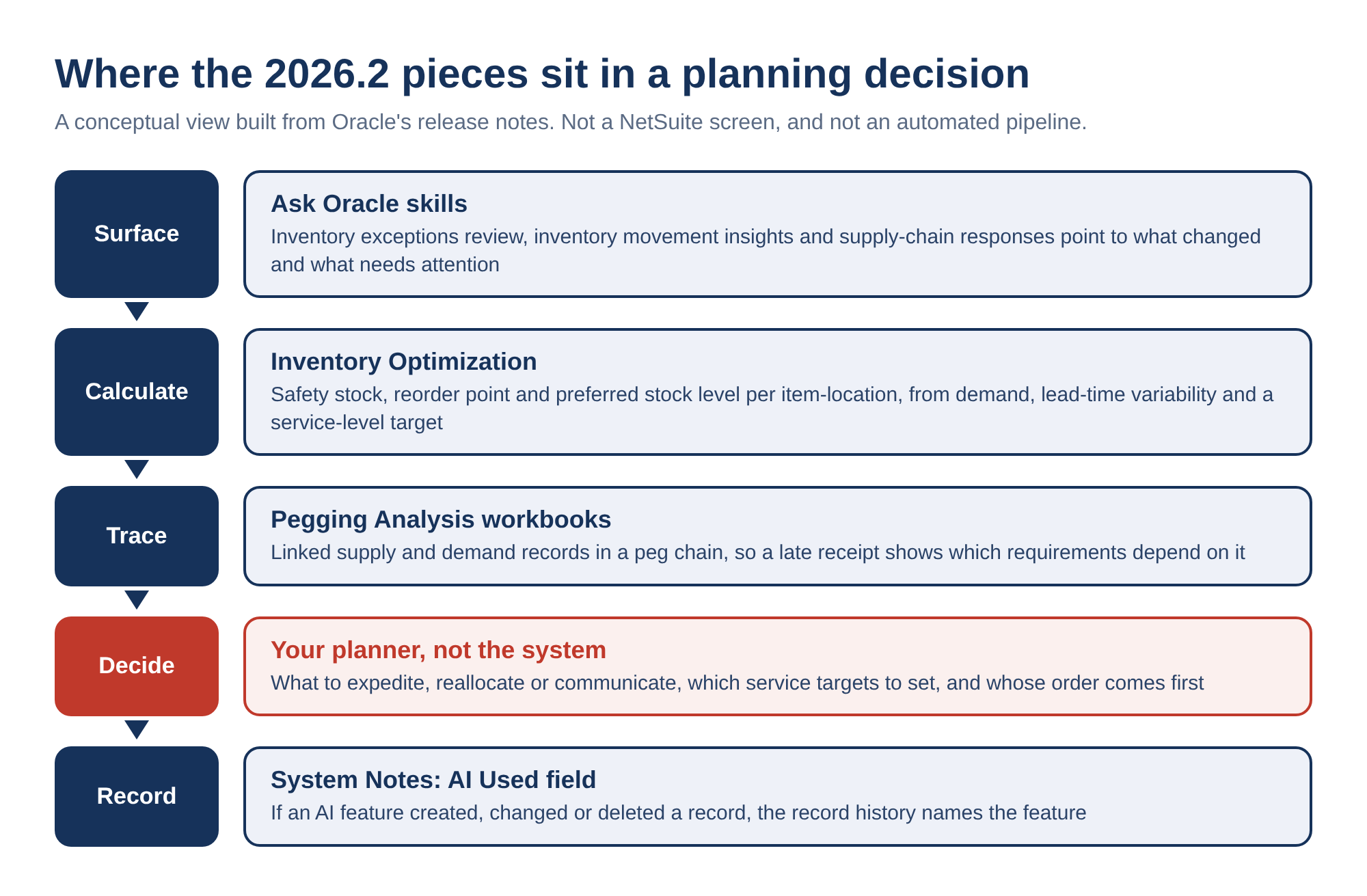
The 2026.2 update stream adds ready-to-use skills to Ask Oracle, including inventory exception review, inventory movement insights, and supply-chain-oriented responses. These skills apply repeatable analysis patterns to common business questions.
For example, a planner may start by asking what changed in inventory or which exceptions need attention, rather than manually assembling a trail across several reports.[2][3]
That is a workflow improvement, not evidence that the system independently owns replenishment decisions. The likely benefit is less time spent locating relevant context and more time reviewing causes and choosing an action.
Whether that benefit materializes depends on the quality of transaction history, item setup, and the permissions available to the user.
Inventory Optimization formalizes the reorder-point calculation
NetSuite’s Inventory Optimization feature calculates reorder-point planning parameters using demand patterns, lead-time variability, and service-level targets. Oracle describes the calculation at the item-location level for eligible items and locations.
Later 2026.2 monthly updates add workbooks and datasets for reviewing stored planning results, comparing service levels and demand with safety stock, reorder point, and preferred stock values.[4][5]
NetSuite already had replenishment workflows, reorder points, safety stock, and preferred stock levels. The change is a more structured way to derive and inspect planning values, rather than a completely new concept of replenishment.
For businesses managing many items across locations, the potential upside is more consistent planning and clearer comparisons between a target service level and the stock buffers being used. The documentation does not promise a specific reduction in stockouts or working capital.
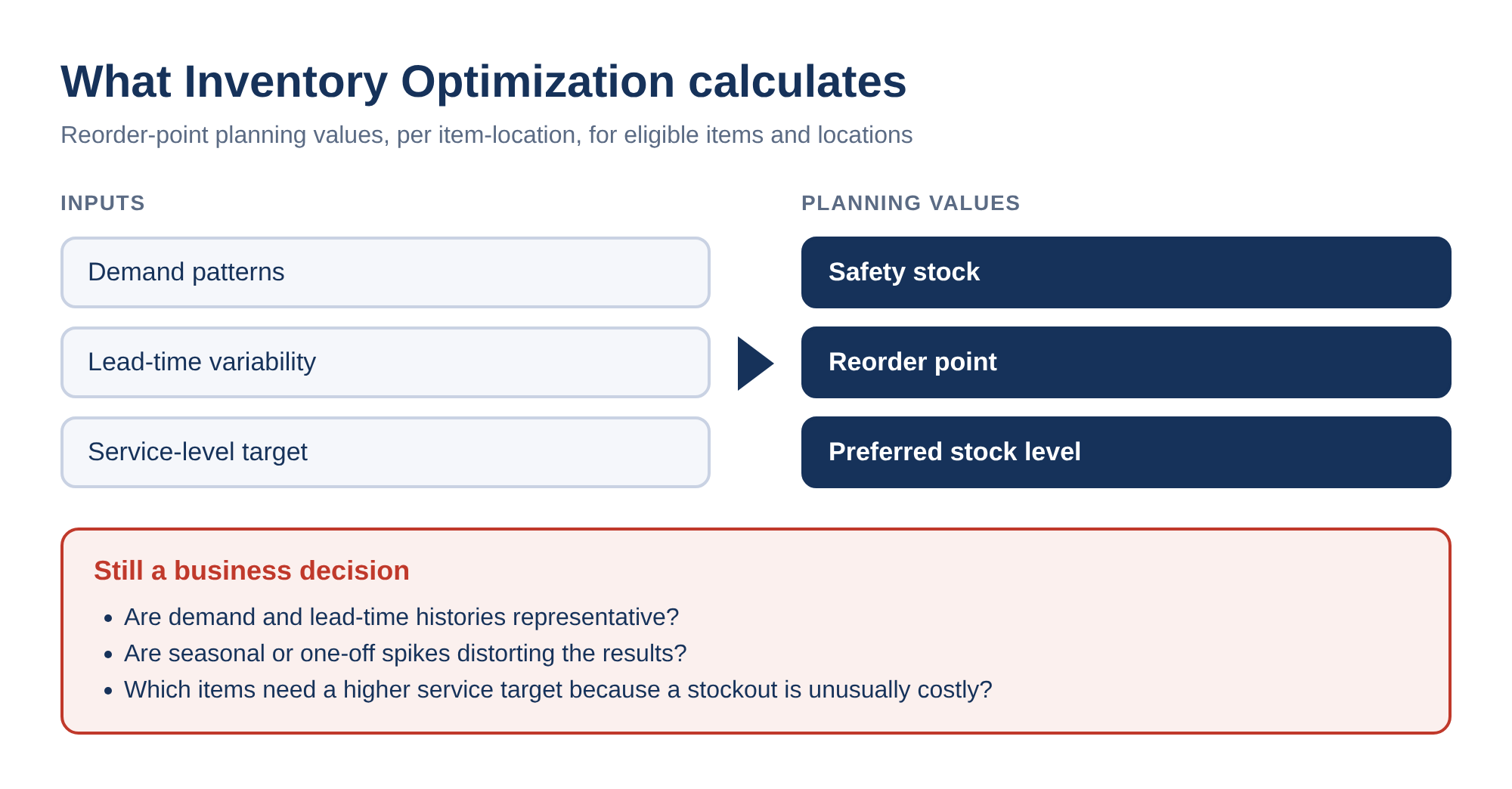
A practical evaluation should ask: Are demand and lead-time histories representative? Are seasonal or one-off spikes distorting the results? Which items should use a higher service target because a stockout is unusually costly? Those questions remain business decisions, even when the system helps calculate the inputs.
Pegging makes supply-demand dependencies easier to inspect
The 2026.2 inventory updates include Pegging Analysis Workbooks for supply planning. The demand view presents linked supply and demand records in a peg chain associated with current or future demand.
This can help planners trace which requirements depend on a planned supply record, instead of treating a shortage or late receipt as an isolated number.[1][6]
The operational value is visibility: when supply changes, teams can investigate the connected demand and decide what to expedite, reallocate, or communicate. The workbook does not itself resolve a supplier delay or determine customer priority.
A useful pilot would test whether the chain is readable for the company’s actual planning process and whether its source records are maintained consistently.
AI activity needs an audit trail
A separate 2026.2 monthly update adds an AI Used field to System Notes and System Notes v2. When an AI feature creates, changes, or deletes a record, the field can identify the feature associated with the change. This gives administrators and reviewers a way to distinguish AI-related changes in the record history.[7][8]
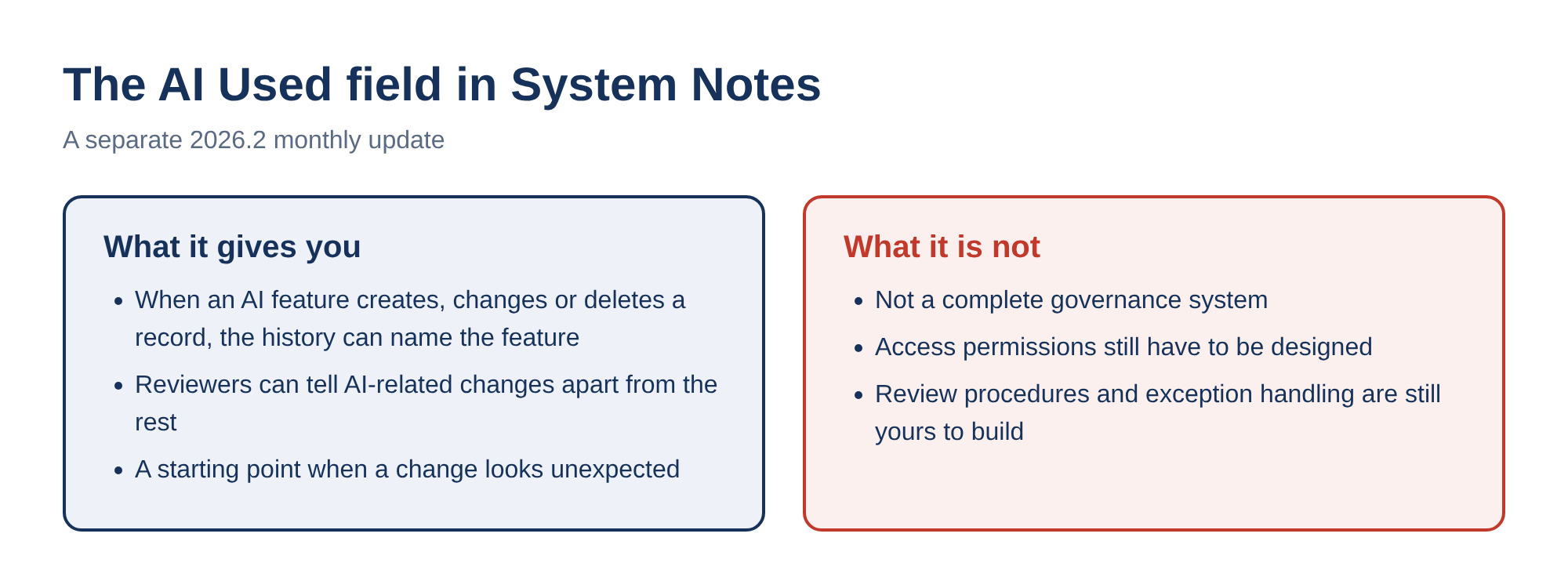
This matters because AI adoption in an ERP is not only about speed. Teams also need to investigate unexpected changes and understand how automation interacts with established controls. The new field improves attribution, but should not be mistaken for a complete governance system: access permissions, review procedures, and exception handling still need to be designed by the organization.
A related restaurant announcement, not a 2026.2 feature
Oracle separately announced NetSuite Restaurant Operations on March 31, 2026. The announcement describes a restaurant-focused solution that brings together back-office areas including inventory, procurement, scheduling, production, and cash management.
Oracle said it planned global availability within 12 months of the announcement; that statement is a plan, not confirmation of current availability in every market.[9]
This is a promising standalone story for restaurant groups: how connected operational and financial data might support day-to-day decisions across locations. But it should be covered separately from the 2026.2 feature roundup. The public announcement alone does not establish local availability, country-specific compliance, or measured customer outcomes.
What to watch during a rollout
| Capability | What the documentation says | What a team should validate |
|---|---|---|
| Ask Oracle skills | New skills cover inventory exceptions, movement insights, and supply-chain responses | Which skills are enabled, what data they can access, and whether answers cite useful records |
| Inventory Optimization | Planning parameters use demand, lead-time variability, and service-level targets | History quality, item-location eligibility, overrides, and results against real stockout/overstock cases |
| Pegging Analysis | Workbooks expose linked supply and demand records | Whether planners can trace dependencies and act on them in their own workflow |
| AI change tracking | System Notes can identify changes associated with an AI feature | Whether review and escalation procedures make those records operationally useful |
NetSuite 2026.2’s more interesting story is the combination: AI skills help surface questions, planning tools organize the evidence, and system notes improve traceability. The practical outcome will depend less on the feature list than on the underlying item, supplier, and transaction data, plus a clear human review process.